Years ago, I found myself completely out of my depth. I was struggling to support my blind rescue dog, Inka. Despite my prior experience with reactive dogs, Inka’s challenges were far more complex than anything I had the skills to handle at the time.
Desperate for help, I contacted a behaviourist whose website made them sound absolutely ideal. Right from the start, a red flag went up: their secretary refused to let me speak with the behaviourist first and simply tried to lock me into a massive, full-day consultation. Inka was also scared of people and this didn’t sit right with me and before handing over a significant amount of money, I wanted to chat with him so he truly understood my terrified, blind dog who I knew would struggle to cope with a grueling, full-day assessment.
Eventually, I got the behaviourist on the phone. As I began to share Inka’s background, he abruptly stopped me.
“I’m not really interested in the history of your dog,” he said coldly. “The reason you have a behaviour problem is that you don’t have any control. History is completely irrelevant. I’m going to teach you how to control your dog.”
Every instinct told me to walk away, so I hung up the phone. I have since watched videos of that specific methodology. They rely heavily on aversive tools like electronic shock collars. When you look closely at the dogs they claim to have "successfully cured" of reactivity or loose-lead walking, the reality is heartbreaking. Those dogs aren't standing tall, confident, and comfortable. They are completely shut down, displaying profound submission. I am thankful every single day that I trusted my gut and chose a different path for Inka.
Why History Matters: The Science of Epigenetics
To say history doesn't matter is to deny basic biology. We are all a product of our history. How we perceive the world and how we respond to stressors is entirely shaped by our past experiences—the things that have brought us joy, and the things that have broken our hearts.
I know this deeply on a personal level. Last year, I suffered immense heartbreak when three of my beloved dogs passed away. That profound grief forever changed me, and my path forward in life is permanently altered because of what happened. Our past shapes our strengths, too. It might sound bizarre, but the communication and de-escalation skills I developed years ago as a flight attendant are tools I rely on every single day in my current role as an emergency medicine doctor dealing with disruptive patients. Nothing we go through is wasted.
The exact same rule applies to our dogs. A dog’s behaviour is a direct product of their life experiences—and it goes back even further than the day they were born.
Through epigenetics, a mother dog's stress, fear, and environment leave a biological imprint on her puppies before they even enter the world. Cortisol and stress hormones pass directly through the placenta and breast milk.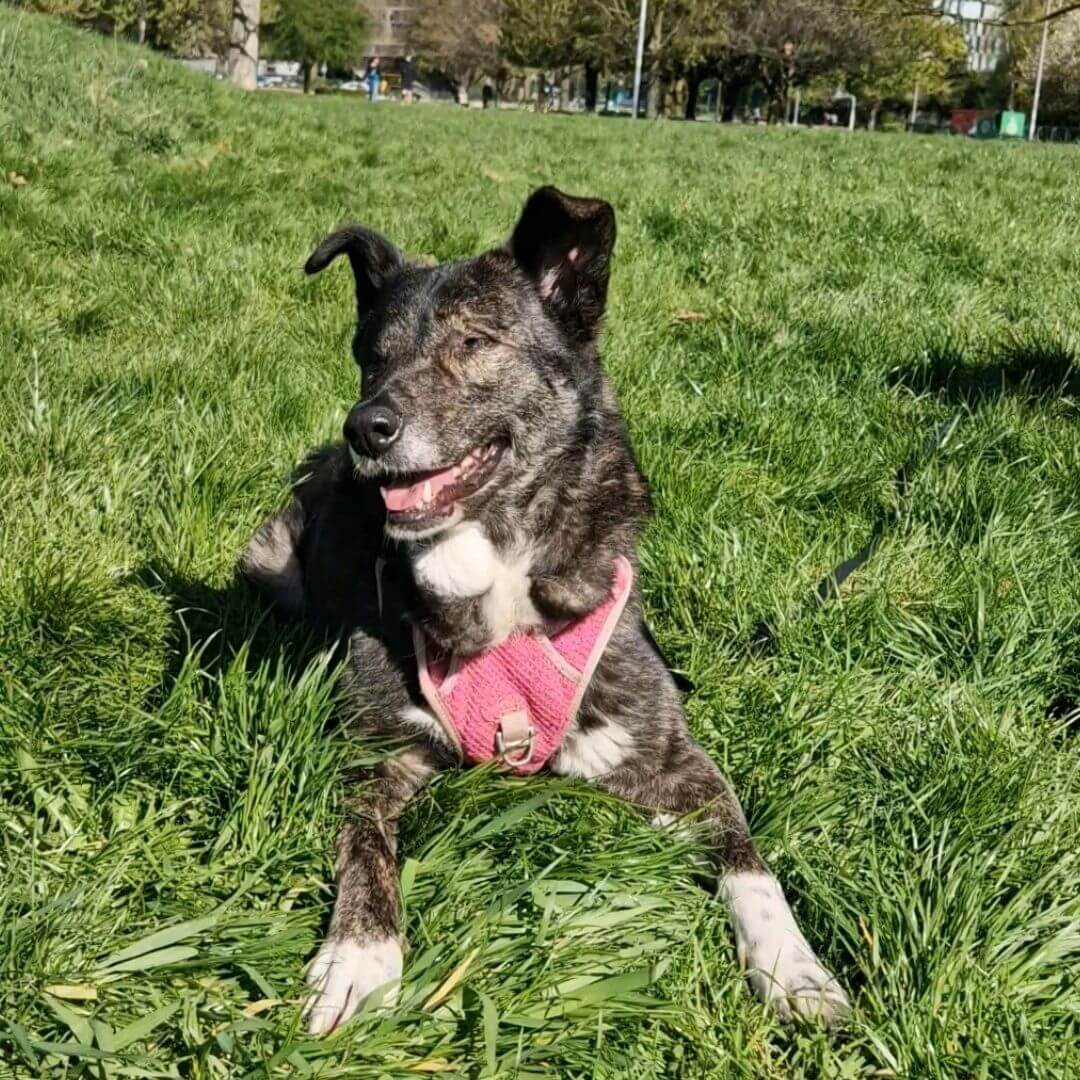
If you have a reactive, anxious, or fearful dog, please hear this: Their emotional makeup may have absolutely nothing to do with how you have raised them. It may have been hardwired into their nervous system before they drew their very first breath.
From Surviving to Thriving: Inka’s Story
Consider Inka’s early history. She was found abandoned in a Romanian river at just two weeks old, restlessly balancing her tiny head on a piece of wood just to stay afloat and survive while her siblings tragically drowned. We can only imagine the extreme stress her mother endured as a stray.
Because she was blind and highly vulnerable, she couldn't safely be socialized with other dogs or people in her early foster care. At five months old, she endured a traumatic, terrifying two-day bus journey across Europe to reach me. Carried out to my van and a couple more hours of a journey with the smell of 5 different dogs surrounding her. When she finally arrived at my home, it took several hours just to build up enough confidence for her to step out of her transport crate.
While my existing dogs used beautiful, gentle calming signals to welcome her, she couldn’t see them. She hit a massive wall when she went into her first season. Looking back, I realize she was in significant pain, which caused her behaviour to spiral. I wish I knew then what I know now; I would have managed her pain so differently.
We were making slow, steady progress through careful management, but then the pandemic lockdown hit. Suddenly, the trails were bombarded by a massive influx of "friendly," off-lead dogs charging at us. Can you imagine being completely blind, already lacking confidence, and being constantly ambushed by strange dogs you cannot see? It completely shattered her progress. Soon, she couldn't even cope with the ambient sound of traffic.
When my brilliant, force-free behaviorist honestly admitted she had run out of ideas, she challenged me to think outside the box. Because standard anti-anxiety medications carried risky neurological side effects for Inka, I began researching medical-grade essential oils.
That was the turning point that changed my entire life.
By engaging Inka’s most powerful asset—her sense of smell—essential oils bypassed her fear responses and began working on a physiological level within 20 seconds. It promoted the release of calming neurotransmitters, making her feel safe, rewarded, and comforted. We built a literal "odour of familiarity." By pairing this specific scent anchor with her behaviour modification protocols, we gave her a portable, predictable bubble of safety she could take anywhere.
Today, because we chose a path of radical kindness instead of punishment, Inka can canicross on a beach alongside 200 other dogs. Most recently, I successfully introduced a new female dog into our home pack—a milestone I once thought would be utterly impossible for her. Inka is the entire reason I am the specialist I am today.
The Medical Paradigm: Pairing Chemistry with Behavioural Work
When I was a fourth-year medical student, my group research project focused heavily on the efficacy of clinical depression treatments. The clinical evidence was undeniable: antidepressants are significantly more effective when used in conjunction with Cognitive Behavioural Therapy (CBT) than when used as a standalone treatment. Medication alone doesn't teach a human new coping mechanisms or rewire deeply ingrained thought patterns. It simply alters brain chemistry to lower the baseline panic, creating a functional "window" where the patient can actually engage with the therapy and do the internal work.
In the canine world, I see two massive, systemic failures happening every day:
People are advised to heavily medicate their dogs, but they are left without the behavioural tools to actually help their dog learn. They expect a pill to fix a lifestyle trauma.
People buy essential oils hoping for a magic bullet, but they don't pair them with a proper behaviour modification plan, nor do they get expert advice on how to use them effectively.
In my medical practice, I see patients who have been on antidepressants for 20 years but are still crippled by daily anxiety because the root behavioural patterns were never addressed. The same tragedy happens to our pets. Oils and medications are gatekeepers to calm—they are not the cure on their own. You have to do the work.
Resetting the Anxious Nervous System
Because I am so incredibly passionate about stopping this cycle of isolation and frustration, I developed The Anxious Dog Reset.
This is not a passive video course or a quick-fix pamphlet. It is a highly interactive, 4-week workshop challenge where we roll up our sleeves and solve these puzzles together.
One of the biggest mistakes dog owners make is viewing behavioural issues as isolated incidents. Lead reactivity, separation anxiety, and severe noise sensitivity are not separate, compartmentalized problems. They are all outward expressions of a highly dysregulated, overwhelmed nervous system. What you do in the quiet moments at home directly dictates how your dog responds when they hit a trigger on a walk.
Week 1: The Physiological Foundation – We unpack the exact science of medical-grade essential oils, mapping out custom olfactory protocols to physically calm your dog's nervous system in under 20 seconds.
Week 2: Reactive to Resilient – We master the hands-on behavioural modification steps needed to handle real-world triggers on walks, teaching your dog to choose calm over conflict.
Week 3: The Safe Space Anchor – We dive deep into independence training, using our established "odour of familiarity" to build a bulletproof sense of security when your dog is left alone.
Week 4: Sound & Environmental Mastery – We target acute sound phobias (like fireworks and traffic), linking all the skills from the previous weeks together to finalize your dog's long-term wellness blueprint.
The beauty of this framework is its interconnected synergy. The boundary-building skills you master during the separation anxiety module will drastically reduce your dog's reactivity on a lead. The focus and focus-anchoring protocols you practice on walks will fundamentally support their resilience during a firework display.
You will leave this workshop with the precise tools, the correct scientific guidance on essential oil applications, and real-time interactive feedback on your progress.
Stop looking for a magic bullet. Your dog's history is real, their trauma may be inherited, but their path to a peaceful future starts with a cohesive, kind, and scientific approach. Let’s do the work together.
As a medical doctor specialising in integrative health, essential oils, and animal behaviour, I offer tailored consultations designed to empower you and your beloved pets. Discover the transformative power of essential oils and explore my doctor-curated kits and bonuses to support your journey. Follow On Social Media
Please remember: Information shared is for educational purposes and not a substitute for medical or veterinary advice. Always consult with a qualified professional for specific health concerns.