Glaucoma in dogs appears to be poorly recognised by owner and vet alike which has been my experience in the recent diagnosis of my spaniel Seren along with fellow dog owners who have commented on my videos talking about their experiences.
So 10 days ago I woke up to find Seren with a cloudy right eye - she seemed otherwise ok but I was worried - no signs of pain. I immediately got in touch with my vet and sent videos in wondering if I should go straight for a referral. To be honest glaucoma wasn’t even one of my differentials as I know how painful it is for my human patients.
Seren was eating normally, normal behaviour - she sadly hasn’t been the brightest since her sister Evie died but what was her normal, and no signs of pain. Only flinched a little when I put some eye ointment in.
We popped along to our appointment and after an examination where she showed no sign of pain, no ulcers and apart from the cloudy pupil and some reduced vision nil else the conclusion was not sure but lets use some antibiotic eye ointment and pain relief and see how she is which I was happy with. Over the next few days she remained the same with first thing in the morning the eye appearing better. We had a nice trip to the beach and she was her normal self. But after 4 days with no improvement I requested a referral to the ophthalmology vets.
The next day on waking Seren could barely open her eyes, was incredibly subdued and lethargic but fortunately we had our eye appointment in a couple of house so off we went.
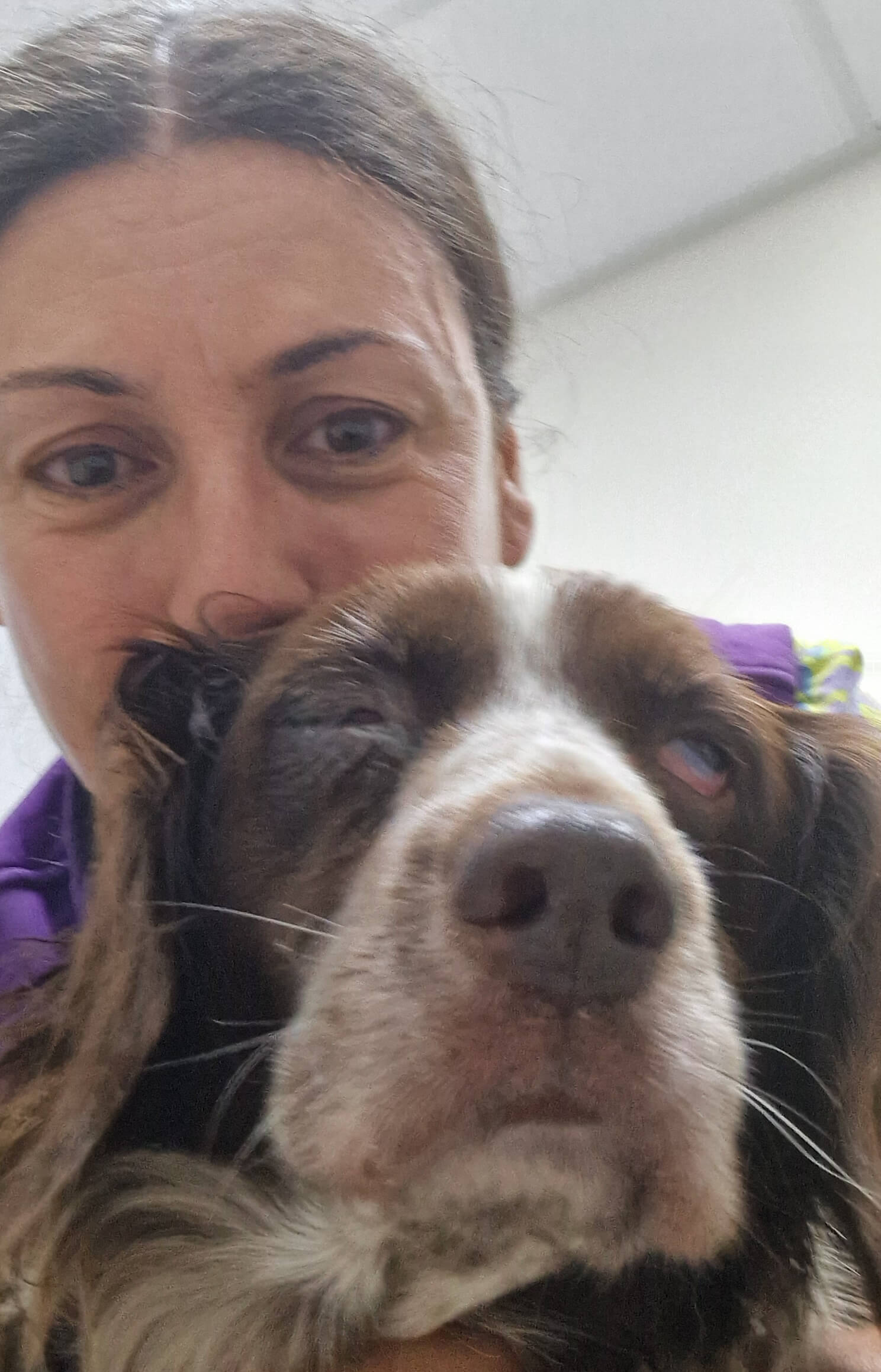
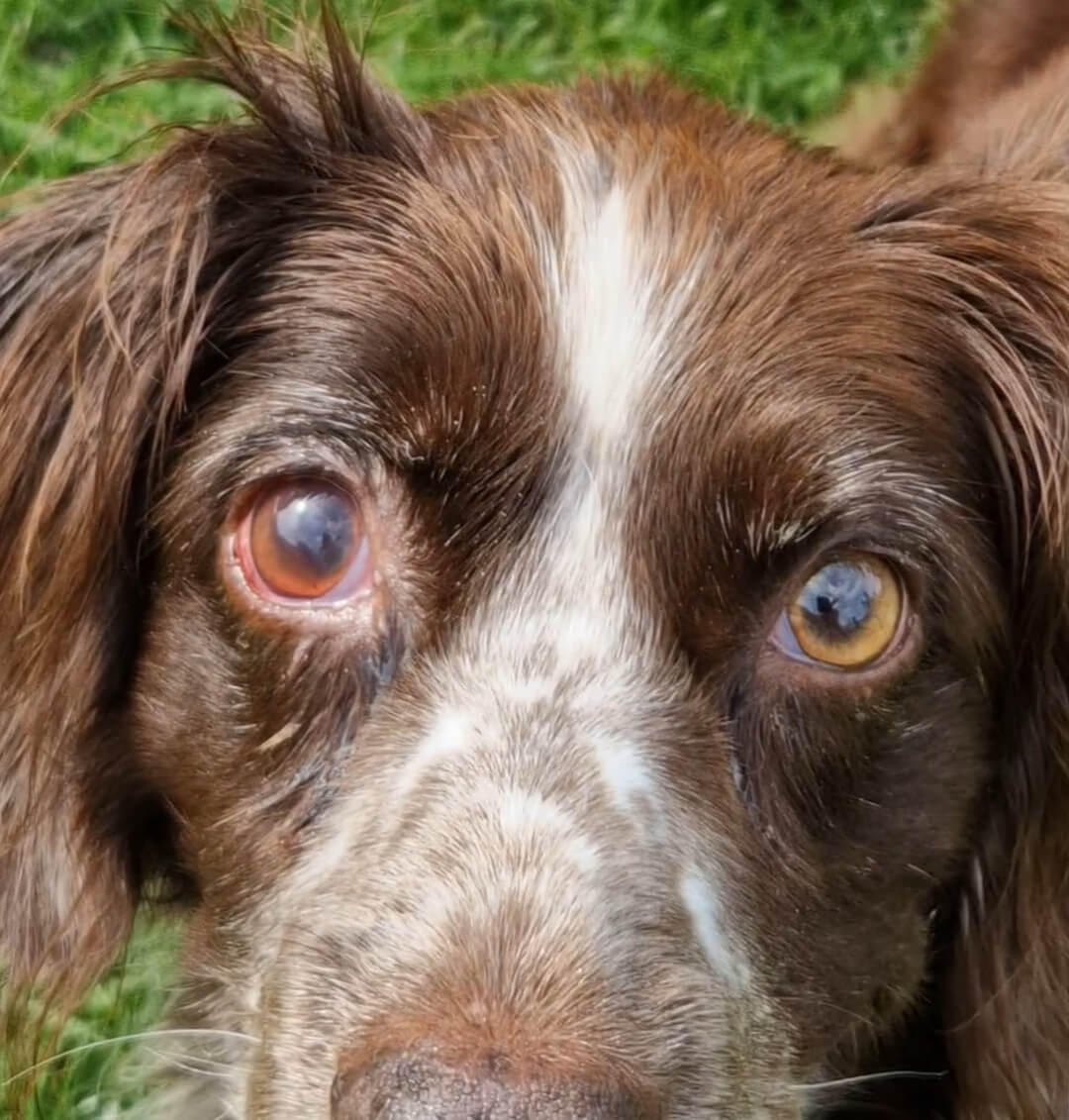
The diagnosis was upsetting. Lens luxation the right eye it was pushing into the anterior chamber hence the cloudiness and in the left it was in the posterior chamber. Both pressures in the eye were high with the right twice as normal and Seren needed an immediate procedure to reduce the pressure and hopefully save her sight. This was very hard for me as my beautiful dog Evelyn died under anaesthetic in May for a routine procedure for arthritis treatment . So our pre-procedure selfie was very emotional.
 Once this was done we were off home with 4 different drops for her eyes and a review in a week, my poor girl already struggling with her age related deafness now has this to contend with too. 5 days on I don’t think her vision has returned but we have our follow up in a day so we shall see. However, I am familiar with blind dog care, Seren is also taking her eye drops like a pro. Disorientated at times and unable to see me when we went to the secure dog field, today we went for a river walk and she was clearly enjoying it and it was nice to see. There will be ups and downs as we navigate this and our mutual grief over our losses in May but today has been a good day.
Some glaucoma facts.
- Glaucoma is a painful condition caused by an increase in intraocular pressure (IOP) due to an imbalance between the production and drainage of fluid within the eye. This can lead to damage to the optic nerve and, if left untreated, permanent blindness.
- There are two main types of glaucoma in dogs: primary and secondary. Primary glaucoma is an inherited condition that is often bilateral (affects both eyes), while secondary glaucoma is caused by another eye disease, such as a tumor or inflammation.
- Certain breeds are predisposed to primary glaucoma, including the Basset Hound, Beagle, Cocker Spaniel, and Siberian Husky.
- Early signs of glaucoma can be subtle and include a cloudy or blue appearance to the cornea, a dilated pupil that doesn't respond to light, and redness of the white of the eye. As the condition progresses, dogs may show signs of pain, such as pawing at the eye, squinting, or a decreased appetite.
- Diagnosis typically involves a comprehensive eye exam, including measuring the IOP with a tonometer.
- Treatment for glaucoma is a medical emergency and requires immediate veterinary care. The primary goal is to quickly reduce the IOP to prevent further damage.
- Initial treatment often involves a combination of medications to decrease fluid production and increase drainage.
- In some cases, surgery may be necessary to manage the condition. This can include procedures that create a new drainage pathway or destroy the cells that produce the fluid.
- Long-term management of glaucoma often requires a combination of daily medications and regular monitoring of IOP.
- A study published in the Journal of the American Animal Hospital Association found a correlation between tight collars and increased IOP in dogs. The study concluded that pressure from a collar could potentially exacerbate or even contribute to the development of glaucoma.
From a natural side of things there is not a great deal to help. But I have made up a little supportive floral blend to apply around the eye, and some antioxidant rich essential oils in her food making sure her diet is rich in certain nutrients. Foods that are high in antioxidants, vitamins, and omega-3 fatty acids can help protect the eyes from damage and support overall vision. Some excellent options to consider adding to your dog's diet include carrots and sweet potatoes, which are great sources of beta-carotene (a precursor to Vitamin A), and blueberries, which are packed with antioxidants. Other beneficial foods include leafy greens like spinach and kale, which contain lutein and zeaxanthin, and fish, which is a great source of omega-3 fatty acids. These natural options can be a healthy addition to a balanced diet and can be added as toppers or as I do incorporated into their meal.
Ready to embrace a holistic path to well-being for your entire family – paws and all? As a medical doctor specializing in integrative health, essential oils, and animal behavior, I offer tailored consultations designed to empower you and your beloved pets. Discover the transformative power of essential oils and explore my doctor-curated kits and bonuses to support your journey.
Follow On Social Media
Please remember: Information shared is for educational purposes and not a substitute for medical or veterinary advice. Always consult with a qualified professional for specific health concerns.