Predatory behaviour is a natural behaviour it is an instinctive sequence of actions triggered by specific stimuli not triggered by emotions and this is really key to understanding, your dog is not being naughty just being quite frankly a dog. How it manifests will depend on the breed. Since the first canine ancestors e.g. the wolf, predation has played a crucial role in survival and ecosystems and different steps of this sequence have been desirable since man first domesticated the wolf so that dogs could be our companions helping us with different jobs.
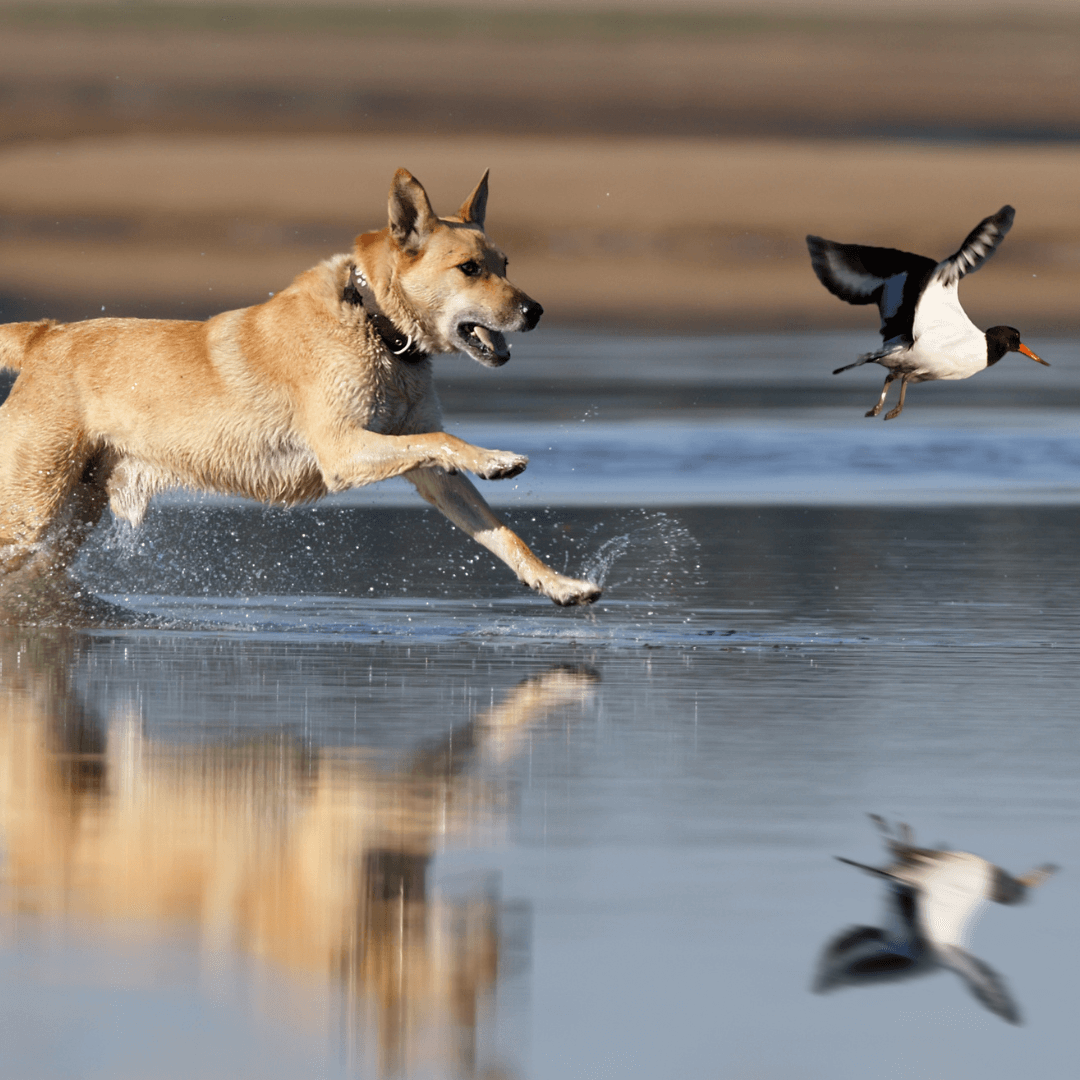
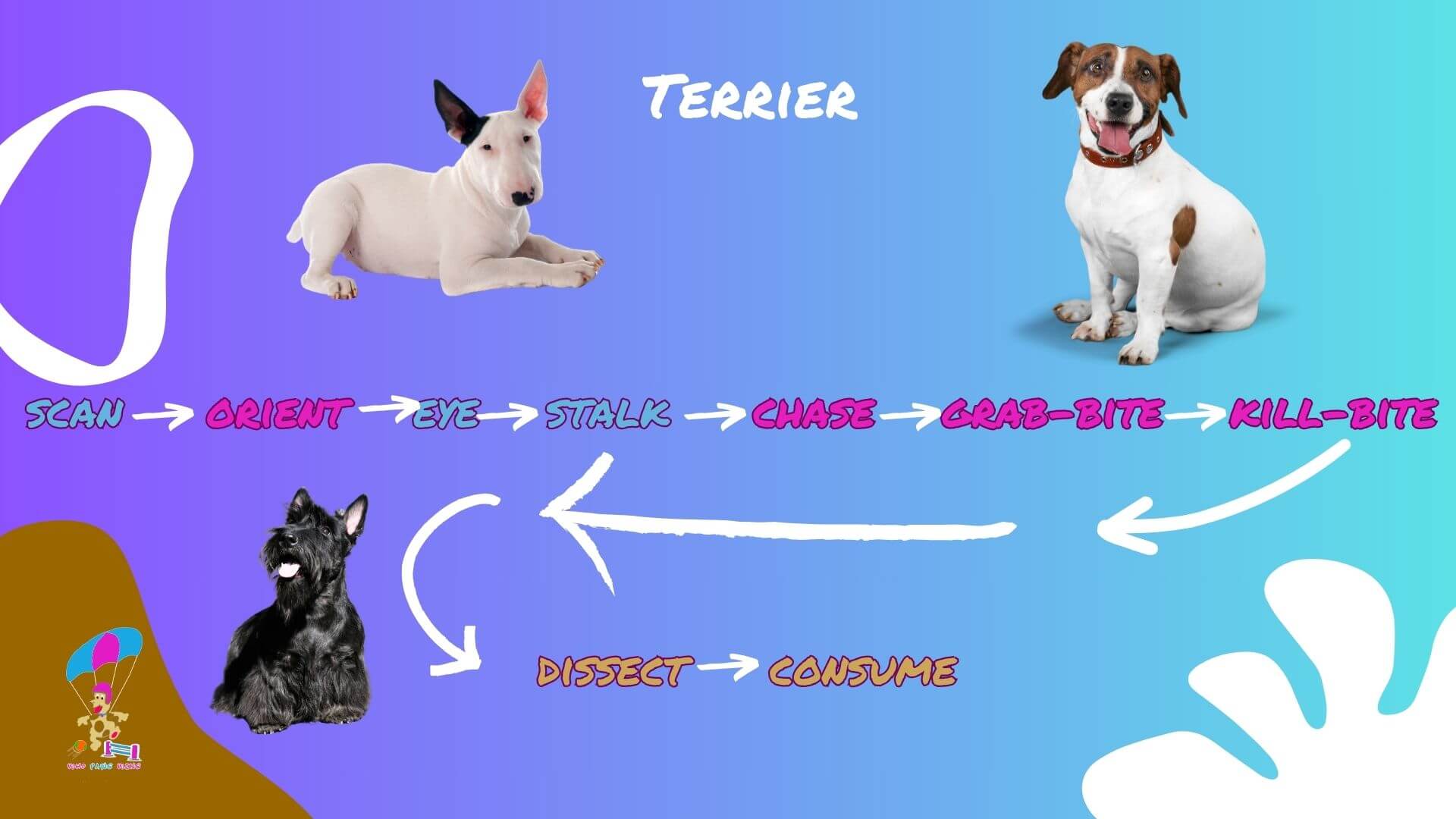
Canine predatory behaviour is a natural sequence of actions and there is a battle between the innate evolutionary behaviours and operant conditioning which is the development of behavior dependent on the environment. How many behaviours of the predatory action sequence our dogs show is dependent on what the breed has been bred for, aspects have been enhanced or muted through breeding to enable our dogs to become the companions to us that we wanted them for. The intact predatory action sequence is Orient (Scent - Track), Eye, Stalk, Chase, Grab- Bite, Kill-Bite, Dissect and Consume.
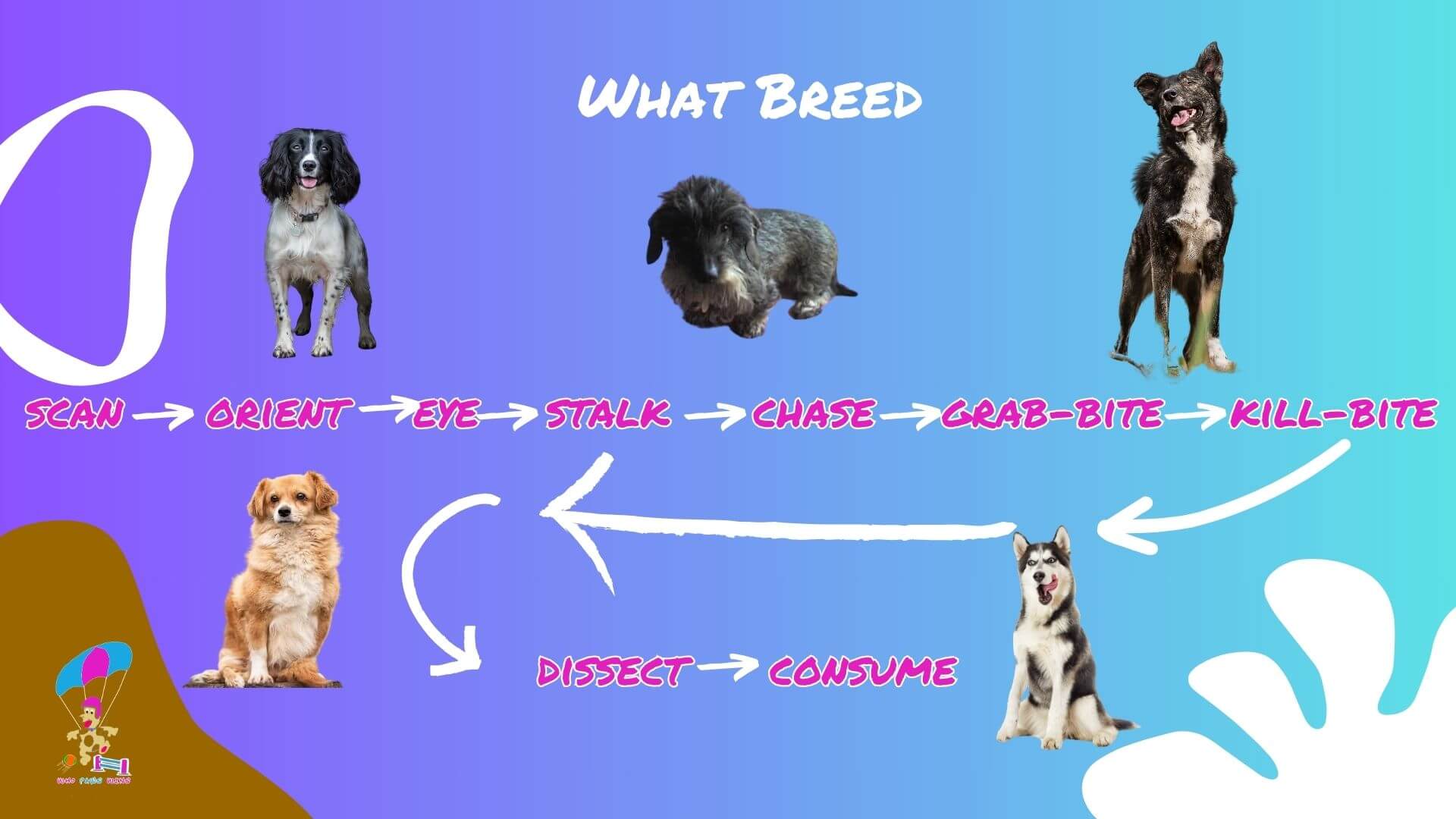
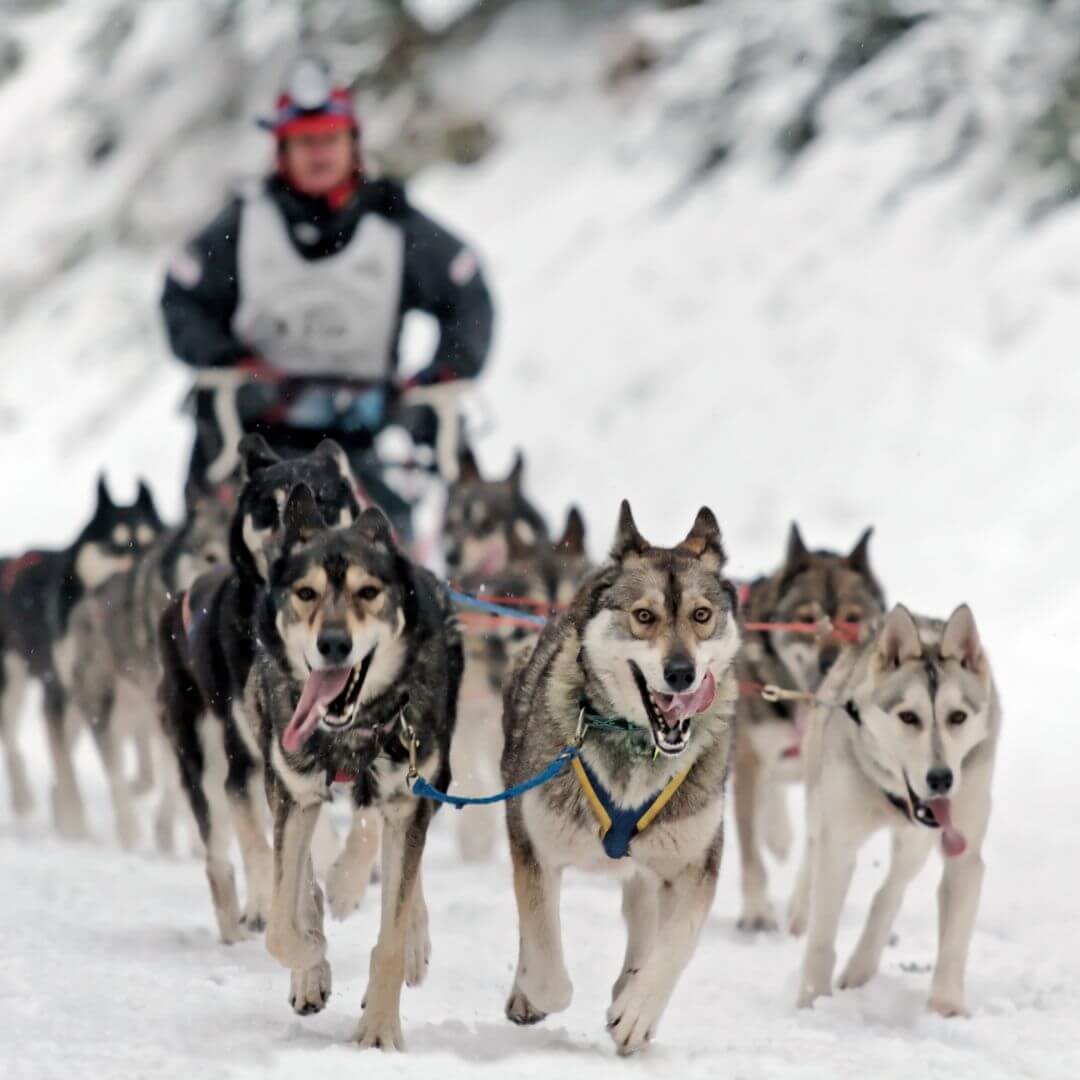
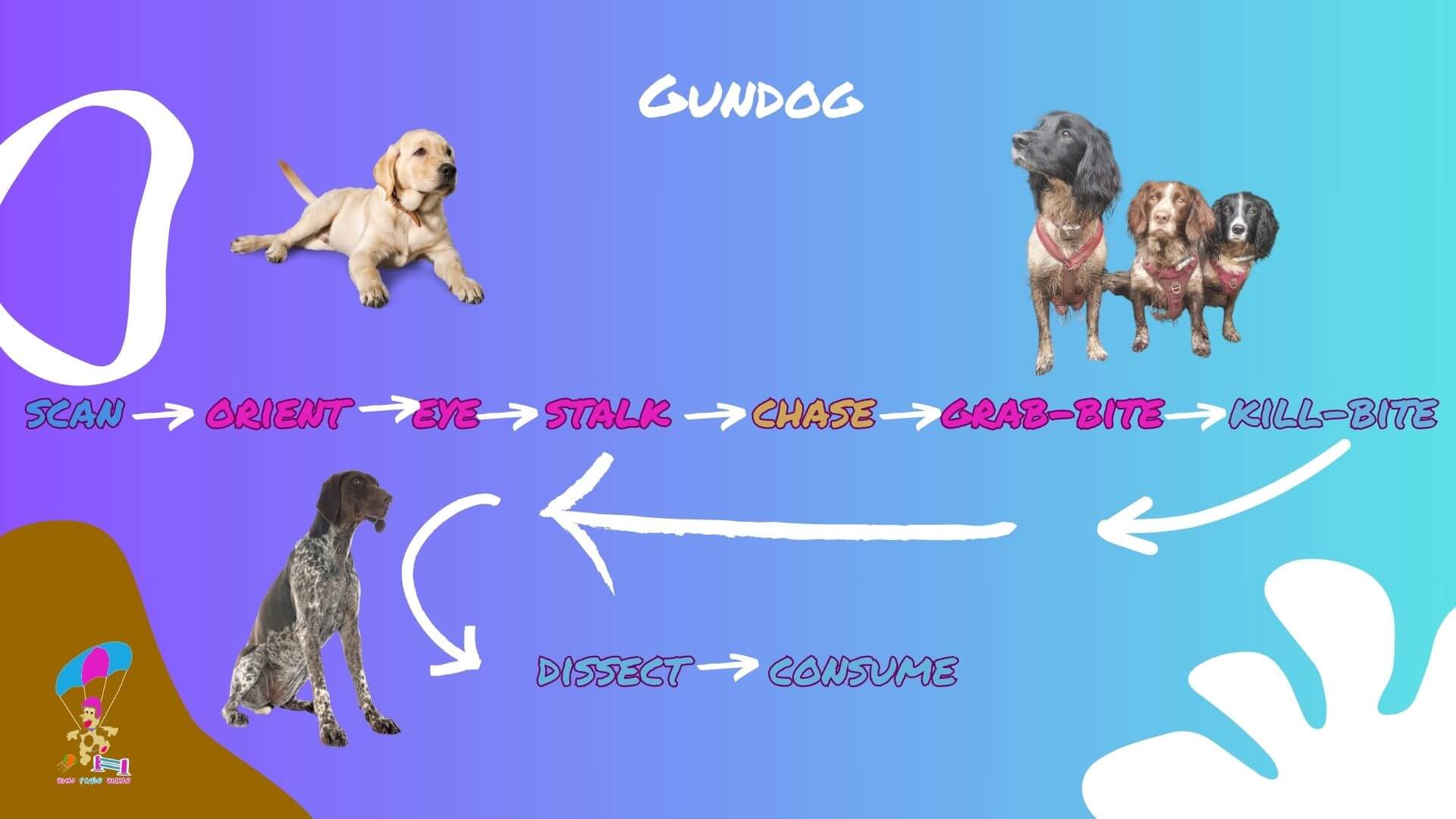
Herding dogs to help manage our flocks, terriers to kill rats, gundogs to flush and retrieve game, those gundogs we want them to have a grab bite which is part of the retrieve but it's not desired for them to have a kill bite we want a soft mouth for them to return the dead game to us in the same condition it was shot. Very few dogs actually have the full predatory action sequence, but in the domestic dog it is more prevalent in the more natural breeds of dogs such as the husky or malamute etc.
These predatory behaviours are driven by instinct; they have intrinsic motivations often critical for survival and hardwired into our dogs. This fixed action pattern is triggered by specific stimulus and once initiated they follow a very predictable sequence of motor actions and they are usually carried out to completion even if the stimulus is removed, they're relatively inflexible and resistant to modification. Which makes it a challenge for dog owners and this is one of the reasons it is so important to get the dog that fits your lifestyle and the one that you can offer the right environment for. Although it is natural, it can be an issue when directed at inappropriate targets (other pets, livestock, wildlife, or even people, especially children).
Breeds we desire are largely because of these behaviors or they should be rather than just based on what the dog looks like sadly too often the case. I've got three springer spaniels and for me the parading behaviors aka the constant retrieving, the carrying of the toys, the socks that they take it out to my garden is no big deal to me it is all part of their normal behaviour. I adore the busyness of their behaviour and it is how I like to live my life. When people get dogs that don't fit their lifestyle or they are unable to meet some of their innate behaviors with their lifestyle these behaviors can become problematic. For example the border collie that is bought from a farm that's got a heavy work ethic is not suited to living in a city centre and is high risk for displaying predatory behaviours when enrichment is lacking such as chasing bikes or chasing cars or runners.
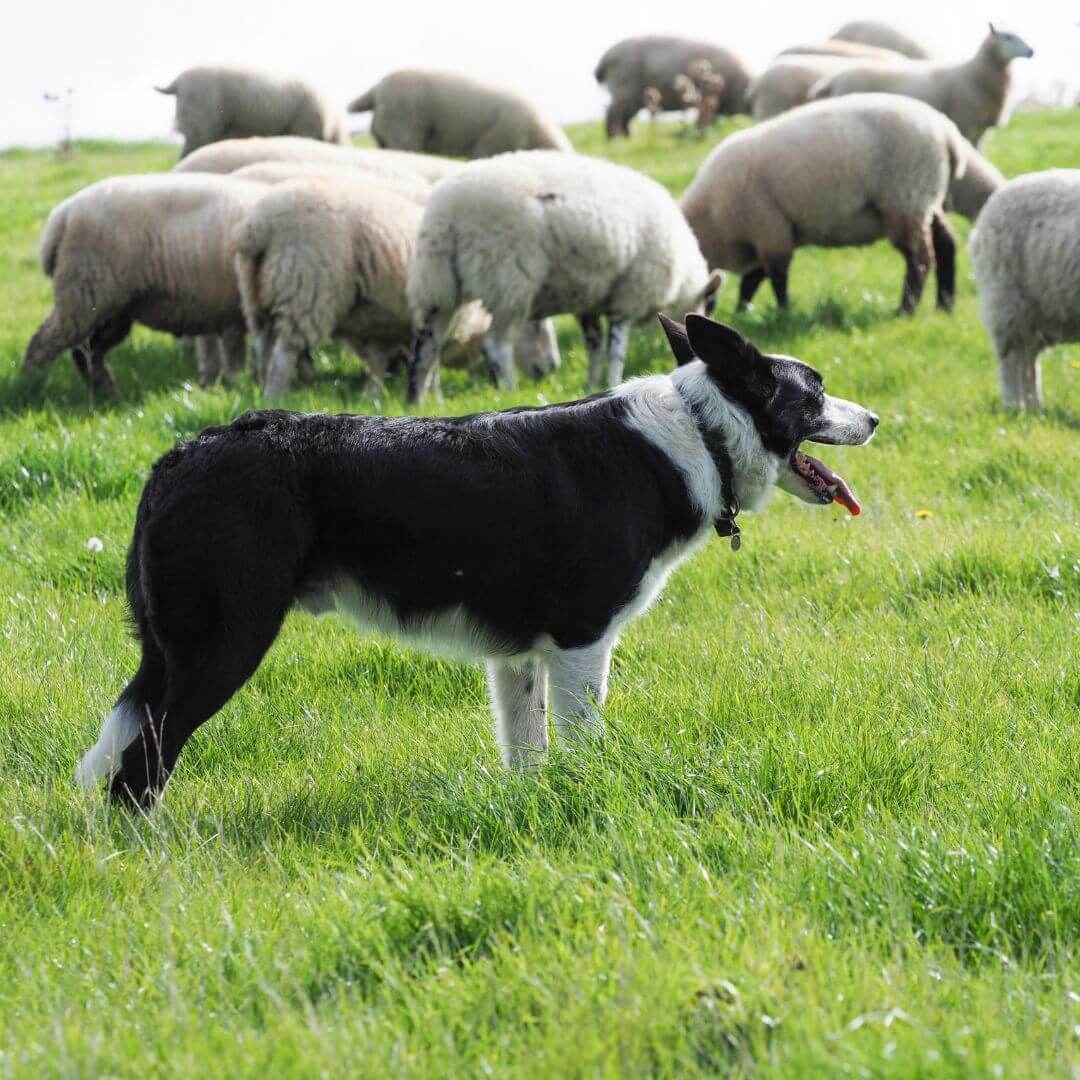
In other cases it might be a dog that is having a lot of lifestyle enrichment but you happen to live near a field where there's lots of sheep and this focus is then causing problems or potential risk with your dog and then we need to address this behavior and find ways to manage it. And it is management as you can’t train it out.
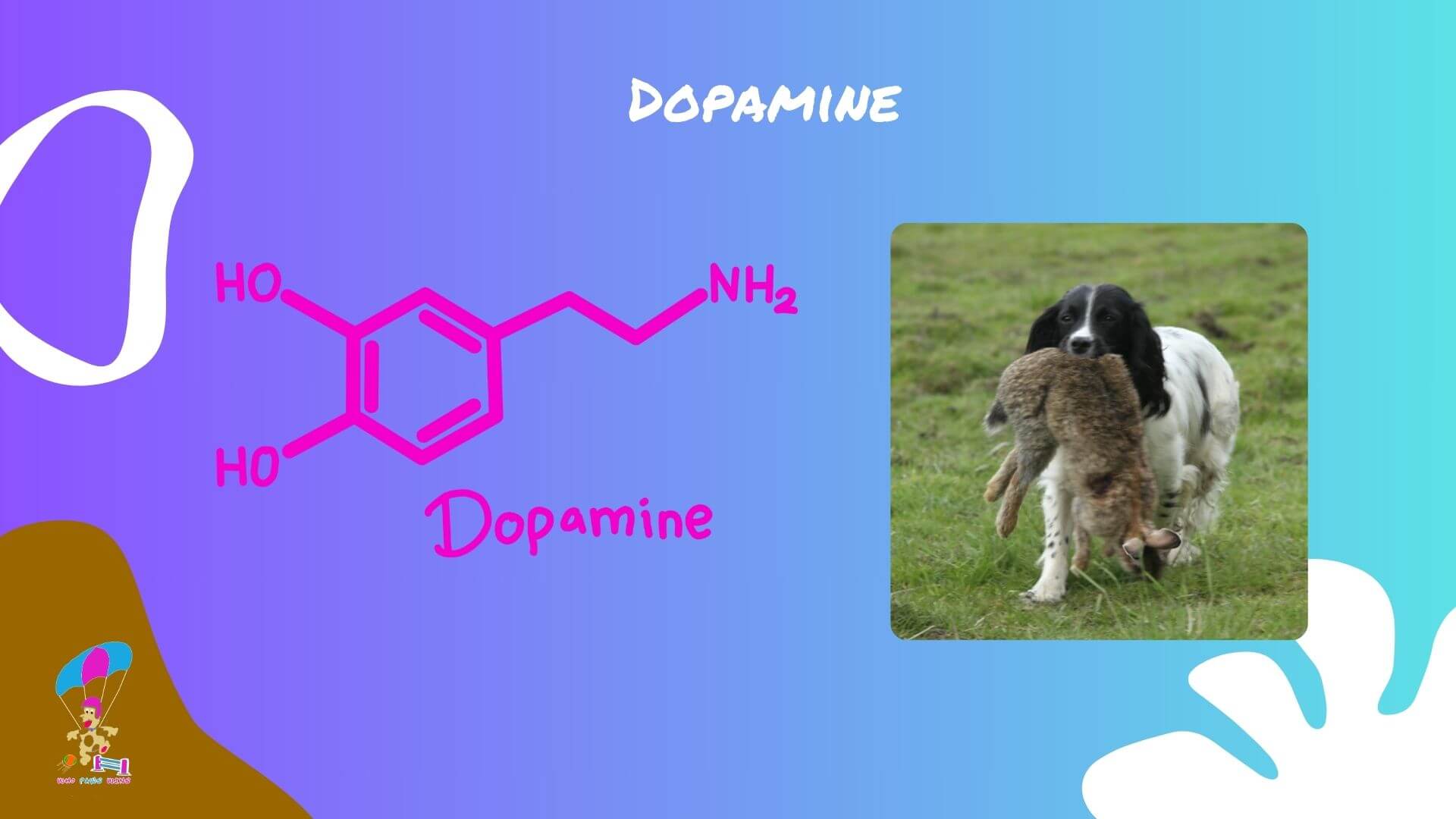
Dopamine is the key neuro-transmitter involved in predatory behaviour, dopamine fires our seeking system for rewards and motivation. We've all had that feeling haven't we when we have that desire for something and it encourages us to go to the cupboard, take the chocolate or go and shop on Amazon and it is never satisfied it's exactly the same for our dogs. It's their pursuit of play and the dopamine release then reinforces the predatory sequence even when it's not successful. This desire for play and the parts of the predatory action sequence in our dogs is going to also determine what kind of behaviours they find really reinforcing and how they play. Often when people contact me for help with calming their dog, I find out that they don’t have a behaviour problem, they have an enrichment problem - change up your interactions and activities for your dog and your spaniel that you say is hyper actually isn’t and starts to be mentally and physically stimulated.
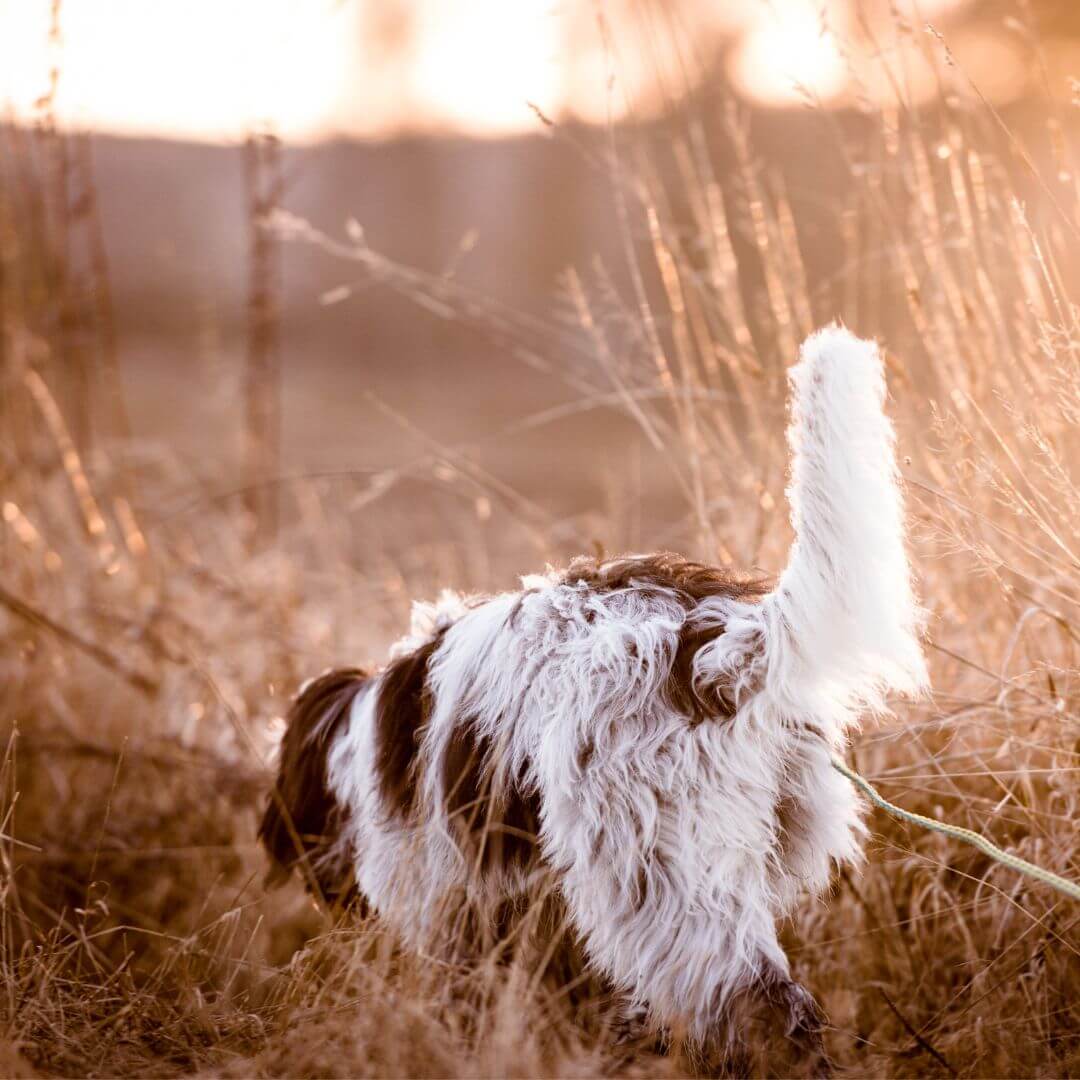
Early life experiences can affect the expression of predatory behavior and your dog’s exposure to prey and play and exploration could influence the experience of predatory behaviour later in life but it is a complex interplay between genetic predisposition and environmental factors whilst variations will exist within the influence of early life experiences it does highlight the plasticity and the adaptability of predatory behaviour. I find this very interesting. My blind dog was rescued as a 2 week old puppy from a river, in foster until coming to me at 5 months old. The only dog of my 6 I have had from a puppy to be introduced to my cats and bunny, all was fine until she hit puberty and it became no longer safe to have her around my bunny and the cats were also of great interest. However, my other 5 dogs - 3 springer spaniels and 2 street dogs were absolutely fine with bunny and cats. Inka, also has great rat catching skills, whereas my springers might stalk and chase these critters if they dare to venture in the garden they don’t catch but their blind sibling is like a heat seeking missile locked onto the target and seeks, catches, grab- bites, kill-bites and drops in one incredibly fluid motion that is nothing taught but innate to her.
Predation is something that can be very complex to manage and it's important that you do get specialist advice so do get in touch. Whilst there are ways to modify and impact the predatory action sequence you're not going to be able to eliminate it and in a lot of the time management really is key.
How can you manage or redirect your dog's prey drive?
If your dog has a particular keenness for the grab-bite part of the predatory action sequence such as dogs like the bull breeds, then playing tuggy is going to be really good. Teaching them a “play” cue and an “off” cue is really important and I would always advise getting proper training in how to play tug correctly.
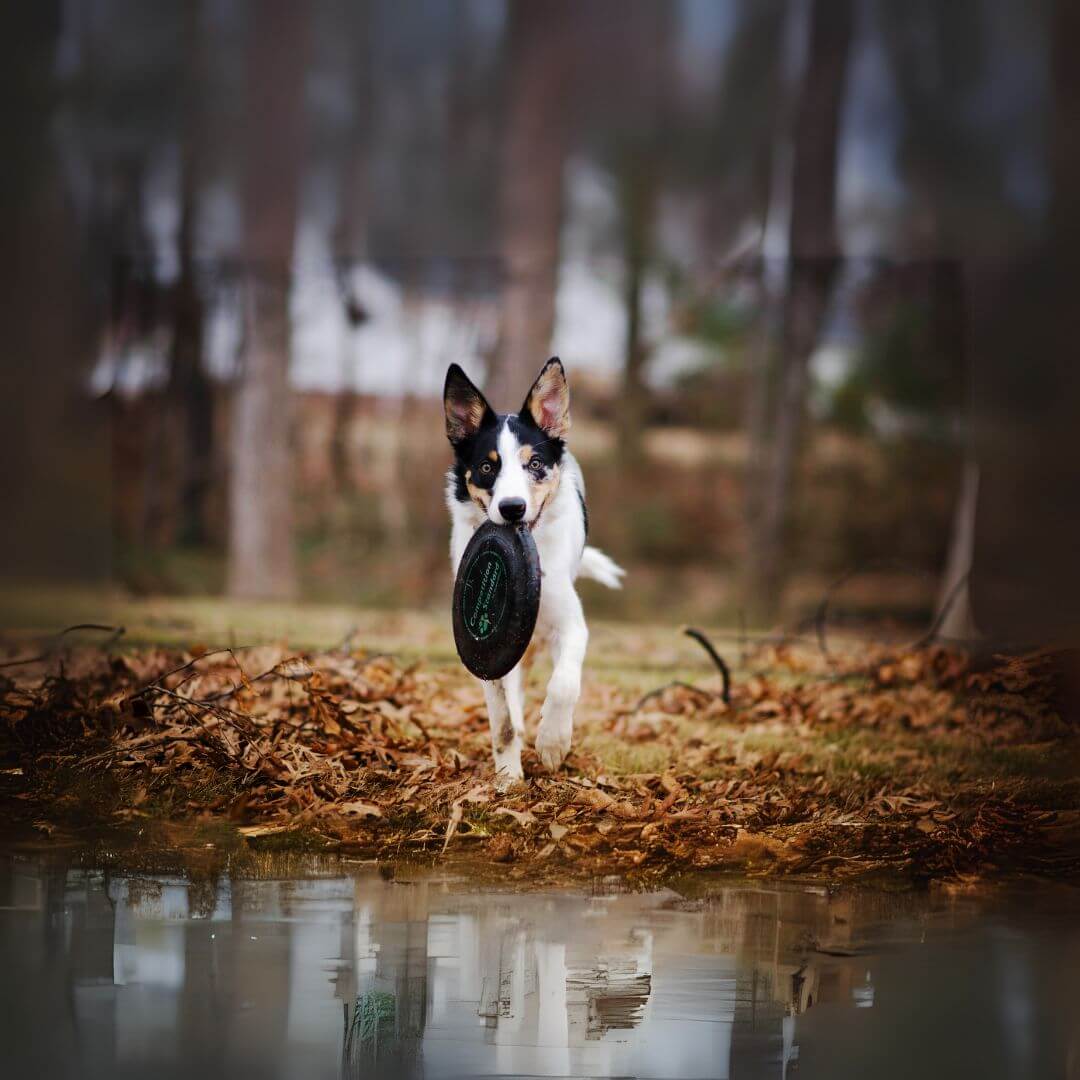
I did a 30 day coaching session with Craig Ogilvie which was invaluable as from my context as a doctor I see too many injuries from this. Once taught, ensure that they can swap between toys so you can build a strong release cue and train for arousal up and arousal down. Interestingly, as a doctor when I have spoken to some patients who have been injured often severely by their family pet who is a bull breed I have found out that often they haven't played these kind of games with them and what has started out with the dog grabbing an arm that the owner thought was playing has then evolved into something else as the dopamine hit the receptors and the dog has gone from this activity that it doesn't get to practice into a very savage attack where they won’t let go, it is “like a switch was flicked” they have said. So again this goes back to getting a dog that you are going to be able to provide the enrichment that they need.
Hopefully I have given you a few ideas of how to help your dog with predation. Which ones you need and how to train them will really depend on your dog and what they're really into, what they find rewarding.
Predation is a very complicated behavior to manage and it is one that I would recommend getting expert help whether from me or someone else. There are a variety of different ways that we can work at changing/managing the predatory behavior that we have in our dogs but how best to tackle it will depend on each individual dog.
If you would like to learn more about this behaviour and its influence on breed etc - have a look at my video on Why Dogs Bite where I cover this in more detail.
Get in touch to find out how I can help you with a tailored plan for you all.
Want to learn more about using essential oils and how they can help your health and that of your pets? Check out my links or drop me a message
Want to get essential oils into your life check out my kits here and find out about all my bonuses that I include for you to get maximum benefit.
Information given here is not intended as a substitute for medical or veterinary consultation - the author has no liability nor responsibility with respect to any issues occurring out of use such as damage, loss, injury.